I Have a Fever. What Should I Do?
By Dr S. Nishanth, MD, DNB (General Medicine), MRCP (UK), FNB (Critical Care), EDIC, FECMO. Internist, Intensivist and ECMO Consultant. Head, Department of Critical Care Medicine, SKS Hospital and Postgraduate Medical Institute, Salem.
The Short Answer
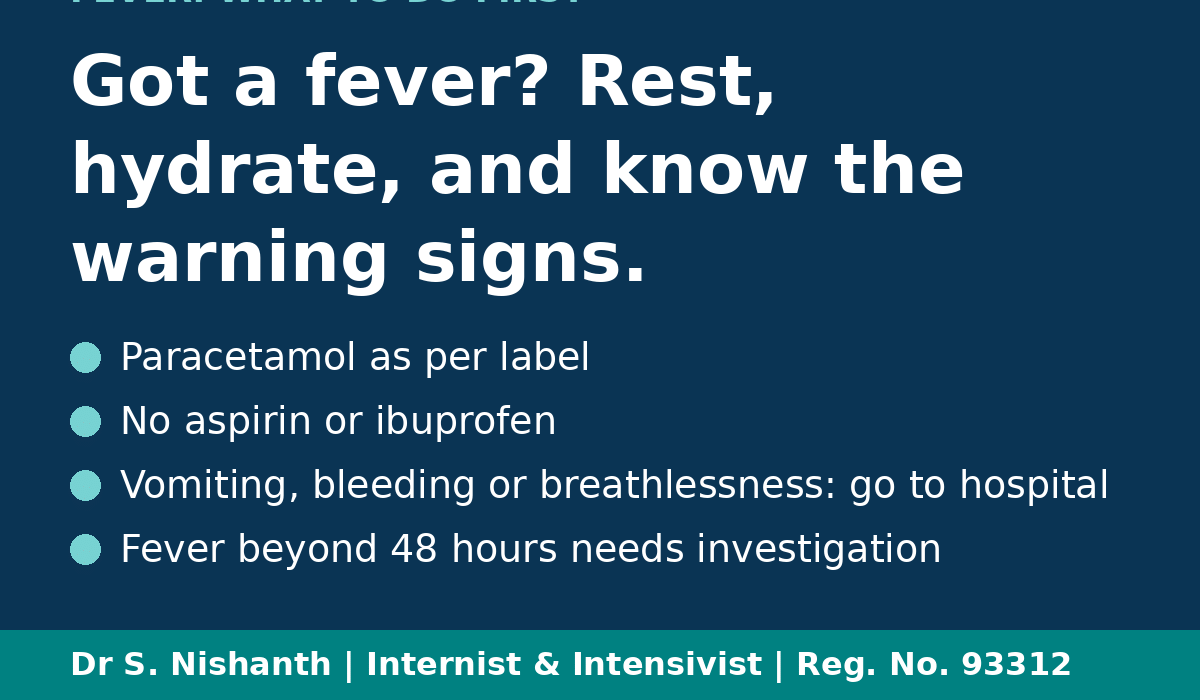
Rest, drink plenty of fluids, and take paracetamol as per the label for fever and body pain. Avoid aspirin, ibuprofen and similar painkillers, and do not start antibiotics or steroids on your own. Go to a hospital at once if you have repeated vomiting, severe tummy pain, bleeding, breathlessness, drowsiness or very little urine. Any fever lasting more than 48 hours needs investigation, so please see a doctor.
Q1. Is fever itself a disease?
Short answer: No. Fever is a sign that your body is fighting something.
Most fevers are caused by viral infections and settle with rest and fluids, but any fever lasting more than 48 hours needs investigation. The fever number alone does not tell us how serious the illness is. What matters more is the cause, how you look and feel, and whether any warning signs appear.
Q2. What can I safely do at home on the first day?
Short answer: Rest, hydrate, eat light, and use paracetamol.
- Rest. Stay home and avoid heavy work.
- Fluids. Drink water, oral rehydration solution (ORS), rice kanji, buttermilk or tender coconut water. Fever makes you lose water, and dehydration makes every illness worse.
- Food. Light, easily digested food is enough.
- Paracetamol. Take it as per the label or your doctor’s advice, and do not exceed the daily limit. Do not combine several medicines that contain paracetamol.
- Sponging. Lukewarm (not cold) water sponging can add comfort.
- Record. Note your temperature and how much you are drinking and passing urine, three to four times a day.
Q3. Which medicines should I avoid?
Short answer: Aspirin, ibuprofen and similar painkillers, and any antibiotic or steroid you start without a prescription.
Aspirin, ibuprofen and other NSAIDs (non-steroidal anti-inflammatory drugs, such as diclofenac) can increase the risk of bleeding. This matters especially in the monsoon season, when a fever may be dengue. The World Health Organization advises avoiding these medicines in dengue. Antibiotics do not work against viruses, and taking them unnecessarily can cause side effects and drug resistance. Steroids can hide the signs of a serious infection.
Q4. Could my fever be dengue?
Short answer: It could be, especially after rains, when mosquitoes breed in stagnant water.
Dengue usually begins with sudden high fever, headache, pain behind the eyes, body and joint pains, nausea and sometimes a rash. Most people recover with home care. The important point is that warning signs of severe dengue often appear around the time the fever settles, usually 24 to 48 hours after it goes away. So a falling temperature should not make you relax. Keep watching for the signs listed below. A blood test can confirm dengue, and your doctor will advise which test is right and when.
Q5. When must I go to a hospital immediately?
Short answer: When any of these appear, do not wait.
- Repeated vomiting
- Severe or increasing tummy pain
- Bleeding from the gums or nose, vomiting blood, or black stools
- Fast breathing or breathlessness
- Unusual sleepiness, restlessness or confusion
- Very little urine, or inability to drink
- Cold, clammy hands and feet
- Fever lasting more than 48 hours (it needs investigation)
Q6. Who should see a doctor earlier?
Short answer: People at higher risk of complications.
This includes young children, older adults, pregnant women, and people with diabetes, high blood pressure, heart, kidney or lung disease, or weak immunity. If you are in one of these groups, do not wait for the third day. Consult a doctor on the first day of fever.
Q7. How can I reduce the chance of fever from mosquito-borne illness?
Short answer: Remove stagnant water and prevent bites.
Empty water from coolers, pots, tyres and trays at least once a week. Cover water storage containers. Use mosquito nets or repellents, and wear full-sleeved clothes, especially in the early morning and late afternoon.
A Note from Dr Nishanth
Most fevers are mild, but a small number turn serious quickly. Early advice from a doctor can make the difference. If you are unsure, please consult a doctor rather than waiting.
Consult Dr S. Nishanth, Internist and Intensivist, SKS Hospital and Postgraduate Medical Institute, Salem. Phone: +91 8807086743.
This article is for general awareness and does not replace a personal medical consultation.
References
- World Health Organization. Dengue and severe dengue (fact sheet). https://www.who.int/news-room/fact-sheets/detail/dengue-and-severe-dengue
- US Centers for Disease Control and Prevention. Dengue: symptoms and treatment. https://www.cdc.gov/dengue/symptoms
- National Center for Vector Borne Diseases Control (NCVBDC), Ministry of Health and Family Welfare, Government of India. National Guidelines for Clinical Management of Dengue Fever, 2023. https://ncvbdc.mohfw.gov.in/Doc/National Guidelines for Clinical Management of Dengue Fever 2023.pdf
- Ministry of Health and Family Welfare, Government of India. Standard Treatment Guidelines: Pediatrics and Pediatric Surgery (dengue chapter: warning signs and home care). https://clinicalestablishments.mohfw.gov.in/sites/default/files/standard-treatment-guidelines/891.pdf
- National Vector Borne Disease Control Programme (NVBDCP). Guidelines for Clinical Management of Dengue Fever, as hosted by Himachal Pradesh NHM. https://nhm.hp.gov.in/storage/app/media/uploaded-files/Guidelines_Dengue.pdf
About the Author
Dr S. Nishanth, MD, DNB (General Medicine), MRCP (UK), FNB (Critical Care), EDIC, FECMO. Registration No. 93312. Head, Department of Critical Care Medicine, SKS Hospital and Postgraduate Medical Institute, Salem.
Website: www.drsnishanth.com | Instagram: @dr_s.nishanth | Phone: +91 8807086743