Is Diwali Smog Harmful to My Lungs? A Simple Guide for Everyone
By Dr S. Nishanth MD, DNB (General Medicine), MRCP (UK), FNB (Critical Care), EDIC, FECMO Internist, Intensivist and ECMO Consultant | Head, Department of Critical Care Medicine, SKS Hospital and Post Graduate Medical Institute, Salem Medical Registration No. 93312
Q1. Is Diwali smog harmful to my lungs?
Short answer: Yes. Smoke from firecrackers, added to vehicle exhaust and winter haze, can irritate the airways and trigger cough, wheeze and breathlessness. Children, older adults, pregnant women and people with asthma, COPD or heart disease are affected the most. Simple steps can protect you.
In detail: Every year, the days after Diwali bring a rise in people with breathing trouble. The air does not just look hazy; it carries tiny particles and gases that your nose and throat cannot filter out. Even healthy people can feel throat irritation, cough or burning eyes at peak pollution hours.
Q2. What is actually in cracker smoke?
Short answer: A mix of very fine dust particles (PM2.5 and PM10), gases such as sulphur dioxide and nitrogen dioxide, and traces of metals.
In detail: PM2.5 means particles smaller than 2.5 microns, far thinner than a human hair. The World Health Organization (WHO) explains that such particles travel deep into the lungs and can even pass into the bloodstream. In the lungs they cause inflammation and weaken the body’s defence against infection. In the blood they make clotting more likely and narrow blood vessels, which is why polluted air is linked to heart attacks and strokes as well as lung disease.
Q3. How do I know how bad the air is today?
Short answer: Check the Air Quality Index (AQI) on a phone app or the Central Pollution Control Board (CPCB) website before going out.
In detail: India’s AQI runs from 0 to 500 and has six categories:
- Good (0-50): minimal impact
- Satisfactory (51-100): minor breathing discomfort to sensitive people
- Moderate (101-200): discomfort to people with lung disease, asthma or heart disease
- Poor (201-300): breathing discomfort to most people on prolonged exposure
- Very Poor (301-400): respiratory illness on prolonged exposure
- Severe (401-500): affects healthy people and seriously affects those with existing disease
On festival nights AQI can climb a category or two within hours, so check it more than once a day.
Q4. Who is at the highest risk?
Short answer: Children, the elderly, pregnant women, and anyone with asthma, COPD, chronic bronchitis, heart disease or diabetes. Outdoor workers such as drivers, street vendors and security staff are also exposed for many hours.
In detail: Children breathe faster and have smaller airways. Older adults often have weaker lungs and hearts. People with existing lung disease have little reserve, so a small rise in pollution can tip them into a flare-up that needs hospital care. Smokers are also at higher risk, as polluted air adds to the damage already done.
Q5. What symptoms should I expect?
Short answer: Dry cough, throat irritation, watering or burning eyes, chest tightness, wheezing and breathlessness.
In detail: In people with asthma, an attack can come on within hours of heavy smoke exposure. In people with COPD, cough and mucus increase and oxygen levels may fall. Mild symptoms in a healthy person usually settle once the air clears, but they should not be ignored if they keep getting worse.
Q6. How can I protect myself and my family?
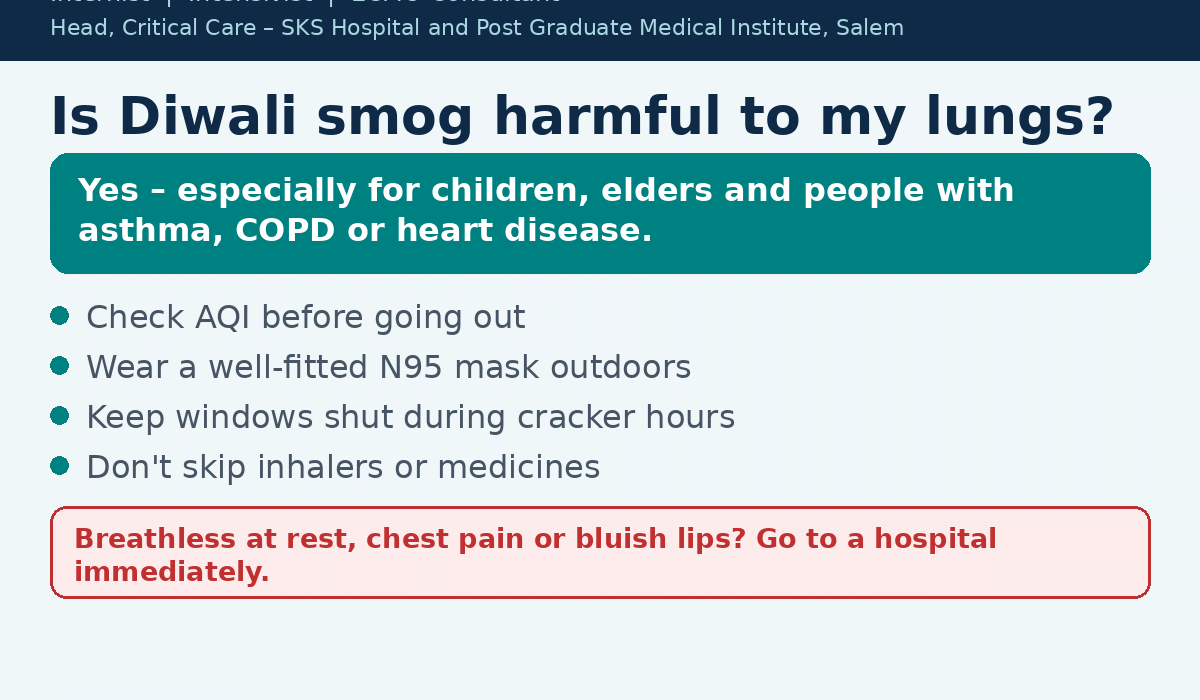
Short answer: Check the AQI, wear a well-fitted N95 mask outdoors, keep windows shut during cracker hours, avoid outdoor activity in early morning and late evening, and never skip your regular inhalers or medicines.
In detail:
- Plan outings by AQI. Postpone walks and exercise outdoors when the air is Poor or worse. Pollution is often highest early in the morning and late in the evening.
- Use a proper mask. A well-fitted N95 mask filters fine particles. Ordinary cloth masks and dupattas are not effective against PM2.5.
- Seal the room. Close windows and doors while crackers are being burst. A room air purifier, if you have one, helps in the bedroom.
- Keep indoor air clean. Avoid incense, mosquito coils and indoor smoke from candles and lamps, especially around children and people with lung disease.
- Stay hydrated and keep up routines such as balanced meals, sleep and regular medicines.
- For asthma and COPD: keep your inhaler within reach, take preventer medicines as prescribed, and keep your doctor’s number with a family member.
- Celebrate with less smoke. Choosing lamps, lights and fewer crackers protects your own family and your neighbours.
Q7. Do diyas and incense also matter?
Short answer: They matter less than crackers, but in a closed room the smoke can still trigger symptoms in sensitive people.
In detail: Doctors report that even short exposure to smoke from lamps and incense can set off flare-ups in people with asthma, COPD or chronic bronchitis. Ventilate the room and keep such smoke away from the sick, children and the elderly.
Q8. When should I see a doctor?
Short answer: See a doctor if cough, wheeze or breathlessness is getting worse, or if you have a fever with cough lasting more than 48 hours. Go to a hospital immediately if you are breathless at rest, have chest pain, bluish lips or face, or your inhaler is not giving relief.
In detail: Smoke-related irritation can sometimes lead on to infection, such as bronchitis or pneumonia. A fever with cough, yellow or green phlegm, or fast breathing needs medical evaluation rather than home treatment. Confusion, extreme drowsiness or being unable to speak full sentences are danger signs and need emergency care.
Q9. Is the harm limited to the festival days?
Short answer: Not entirely. A few days of heavy smoke can cause a flare-up, but the larger damage comes from breathing polluted air for months and years.
In detail: WHO links long-term exposure to polluted air with higher risk of respiratory infections, heart disease, stroke and lung cancer, and notes that fine particle pollution can harm health even at low concentrations. Diwali is a sharp peak on top of an already polluted winter, so protecting yourself through the whole season is wise.
Take-home message
Let the lights shine, but guard your lungs. Check the AQI, wear an N95 mask when you must go out, keep indoor air clean, and seek medical help early if breathing worsens. If you have asthma, COPD, heart disease or diabetes, speak to your doctor before the festival season.
For general awareness only. This article does not replace personal medical advice.
Dr S. Nishanth | Internist, Intensivist, ECMO Consultant | SKS Hospital and Post Graduate Medical Institute, Salem | Reg. No. 93312 Website: www.drsnishanth.com | Instagram: dr_s.nishanth
References
- World Health Organization. Ambient (outdoor) air quality and health. WHO fact sheet. https://www.who.int/news-room/fact-sheets/detail/ambient-(outdoor)-air-quality-and-health
- World Health Organization. Air quality, energy and health: health risks of ambient air pollution. https://www.who.int/teams/environment-climate-change-and-health/air-quality-and-health/sectoral-interventions/ambient-air-pollution/health-risks
- Central Pollution Control Board, Government of India. National Air Quality Index (IND-AQI) report, 2014, including health statements for AQI categories. https://cpcb.nic.in
- Commission for Air Quality Management in NCR and Adjoining Areas. NCR AQI Bulletin (AQI categories and possible health impacts). https://caqm.nic.in
- Business Standard. Diwali 2025: How asthma and COPD patients can protect their lungs from smog. 17 Oct 2025.
- The Tribune. Firecrackers don’t just light up sky, they inflame your lungs: health experts call for caution.
- Outlook India. Pollution pushes lungs to the limit, but prevention can save lives, says pulmonologist.
- Manipal Hospitals. Health risks of Diwali firecrackers. Manipal Hospitals blog.